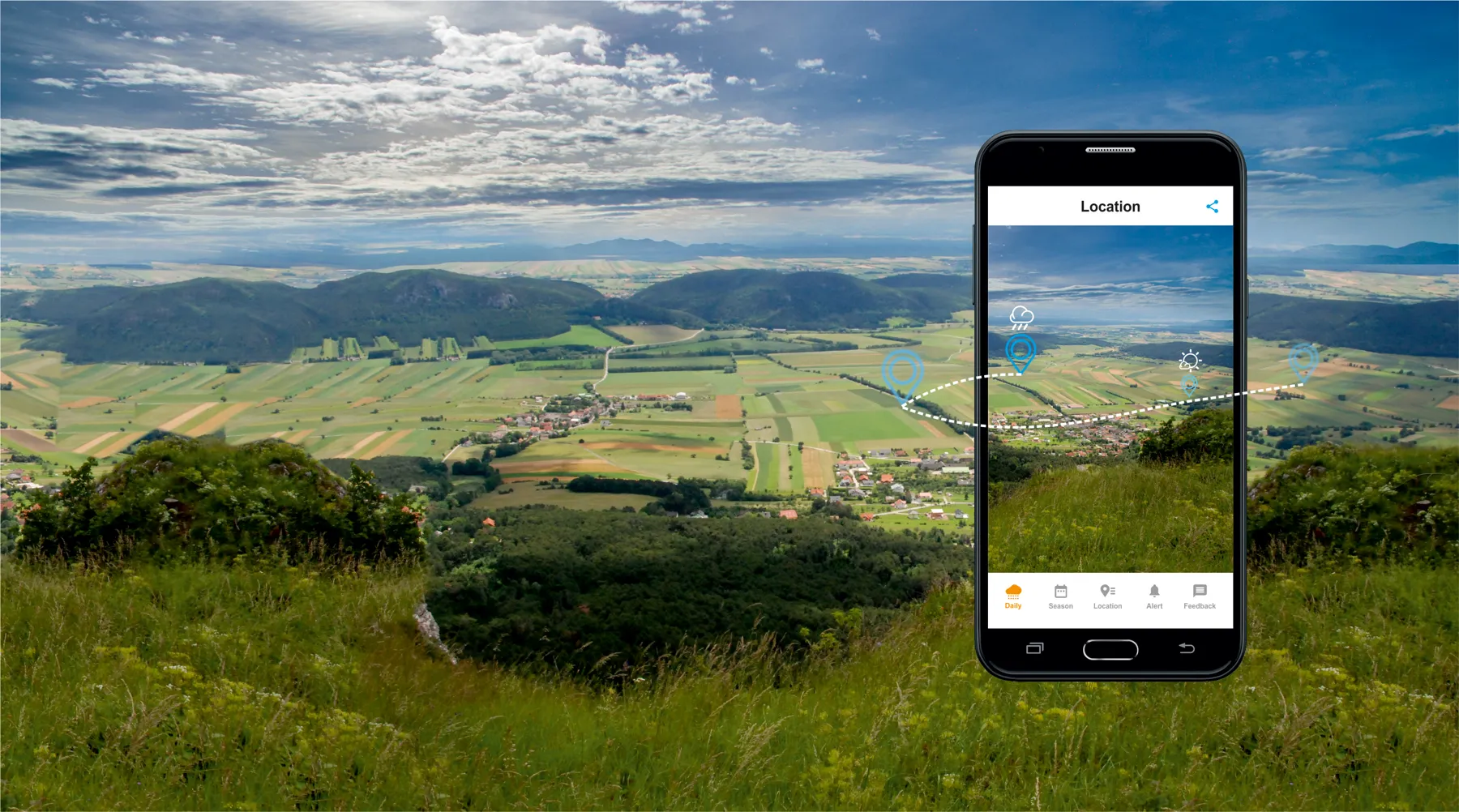
Yara FarmWeather
A weather app that helps smallholder farmers plan their daily work, built for hard-to-access places with limited technology and launched across multiple countries.
Yara International · 2018 onward
- My role
- Led the research and design
- Team
- 2 UX designers, 1 UX researcher. The product team ships it.
- Years
- From 2018, idea to launch and evolution
- Outcome
- More than 5 million users, shipped by the team
01 The full story
Designing a global agtech product used by farmers across diverse and challenging environments.
The brief
Define, design, and launch a new digital product to support farmers in managing daily agricultural activities. Build a core experience that works globally, while allowing adaptation to local contexts and specific needs across different countries.
My role
As a new member of the Smallholders digital team, led UX across the project and helped establish it as a key driver of product value from early idea through launch and evolution. Defined the right UX strategy and resources for each phase of the product lifecycle, keeping user needs central and building long-term engagement.
- 03.A
User research as a core
We conducted research across multiple countries, working directly with smallholder farmers operating in hard-to-access environments where access to technology is limited. To ensure success in such challenging conditions, we partnered with local researchers and field agents to bridge cultural gaps. This collaboration resulted in deeper insights and genuine openness, allowing us to truly understand pain points and opportunities.
The rapid iterative design process that followed helped our team test solutions and better understand how real-world needs and constraints were being addressed. This ensured the product remained grounded in how users actually work, rather than in office-based assumptions.
This deep user research plan demonstrated clear business value, proving to stakeholders how UX research can be a driver in the early stages of a project and guide key strategic decisions.
- 03.B
Designing for real world journeys
Farming workflows vary significantly depending on location, infrastructure, and access to technology.
We mapped detailed user journeys to understand how decisions are made in different contexts, including low connectivity environments and the use of basic devices.
Properly understanding the interactions between real world situations and a new digital product was key to understand how it was best to design so what we showed the user mattered at the right moment.
These journeys became the foundation for defining the product experience, ensuring that key interactions supported real tasks and decision points.
- 03.C
Evolving the product through user feedback
After the initial launch, user feedback became a key driver for product evolution. Because the UX team was fully integrated within the product team and working in an agile setup, we were able to iterate quickly and continuously.
This allowed us to leverage integrated analytics and feedback channels to observe real user behaviour as it emerged. By understanding how needs shifted as users matured with the product, we were able to introduce new capabilities that addressed their evolving requirements.
This ensured the platform grew in line with validated needs rather than initial assumptions and gave clarity to the business on how to add new functionalities to the app in a way that it would not break the positive experience of users.
- 03.D
An Agtech success story
The product was adopted by more than 5 million users across different countries and became a trusted tool for farmers.
It demonstrated how a collaborative, user-centered approach can bring real value to an underserved community, turning complex needs into a solution that users actively rely on.
02 Ownership
What I did, and what the team did.
How it worked
From the field to the forecast.
Scroll through the four steps. The images are from the work.
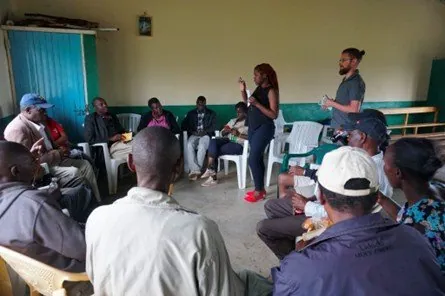
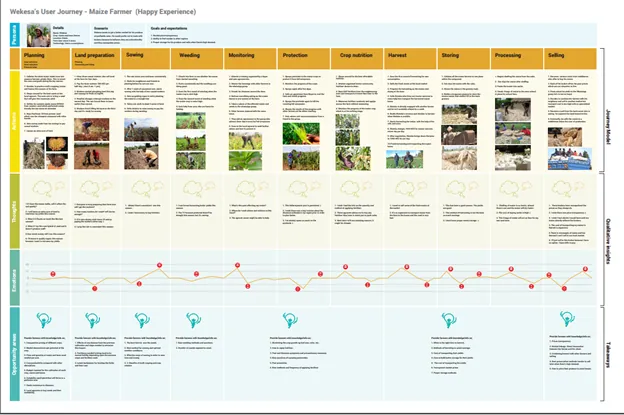
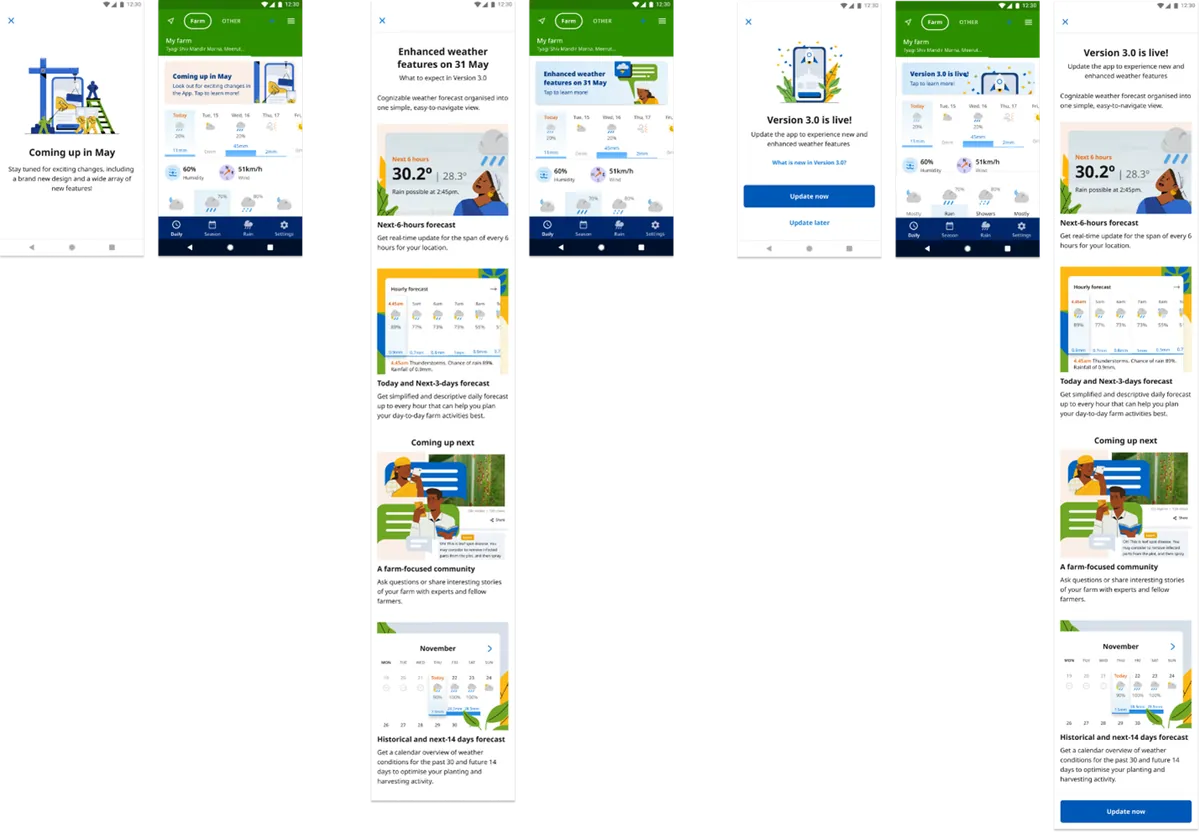
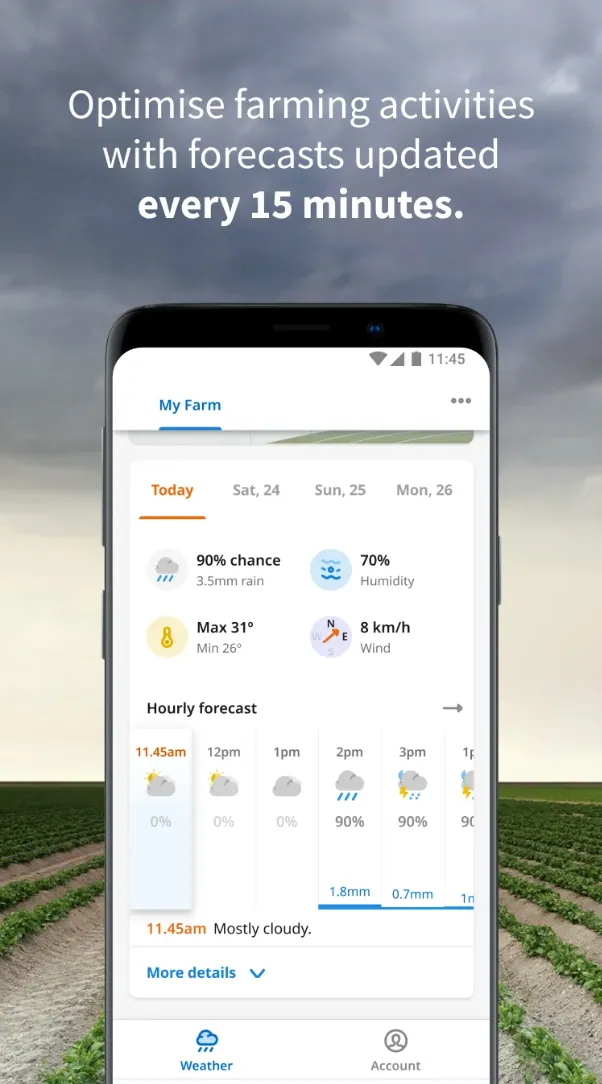
Fig. 3.1 · A research session with farmers.
- 01In the field
Partner with local researchers and field agents
To bridge cultural gaps and get honest insight from smallholder farmers.
- 02Across the season
Design for low connectivity and basic devices
Using journeys mapped to real decision points on the farm.
- 03Inside the product team
Embed UX inside the product team
So feedback and analytics after launch drove what came next.
- 04Launch and evolution
Launch and evolution
The product team ships it and keeps improving it with feedback and analytics.
03 Decision map
The decisions, and why.The pivotal decision.
Three decisions I made in this work, and how or why I made each one. Where a figure shows the result, it is linked.
-
01
ChosePartner with local researchers and field agentsWhy
To bridge cultural gaps and get honest insight. It also showed stakeholders that research could guide strategic decisions from the start.
See Fig. 3.1 ↓ -
02
ChoseDesign for low connectivity and basic devices
-
03
ChoseEmbed UX inside the product teamWhy
Analytics and in-app feedback showed how needs changed as farmers got used to the product, so new features were added without breaking what already worked.
See Fig. 3.3 ↓
04 Evidence
The work behind the decisions.
Select a figure to open it larger.
Supports decision 1 ↑
Supports decision 2 ↑
Supports decision 3 ↑
Supports decision 2 ↑
Research and design I led, shipped by the team to more than 5 million users.
A global product launched and adopted by more than 5 million users across multiple countries, and a key tool supporting farmers’ daily work and decision-making.
A global Agtech product that turned deep user understanding into a solution adopted and valued by farmers across multiple countries.
On Google Play it was rated 4.6, from more than 9,000 reviews. One farmer wrote: “The app is superb to me because it has helped me a lot, especially in my farming practices.”
Contact
Open to design leadership roles.
I’m based in Singapore and can work in Singapore and the EU without sponsorship. Available now.